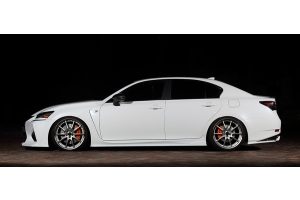
Carbon Fiber Hoods Explained: What to Know Before Buying One for Your Lexus


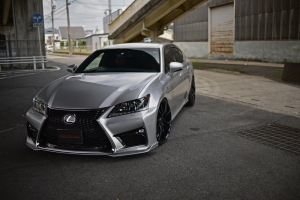
A carbon fiber hood is one of those parts that changes how a car looks from every angle. It's also one of the parts people buy without thinking through the details. So let's walk through what a carbon hood really does, what to watch out for, and the ones we carry for the Lexus RC F, RC and IS F.
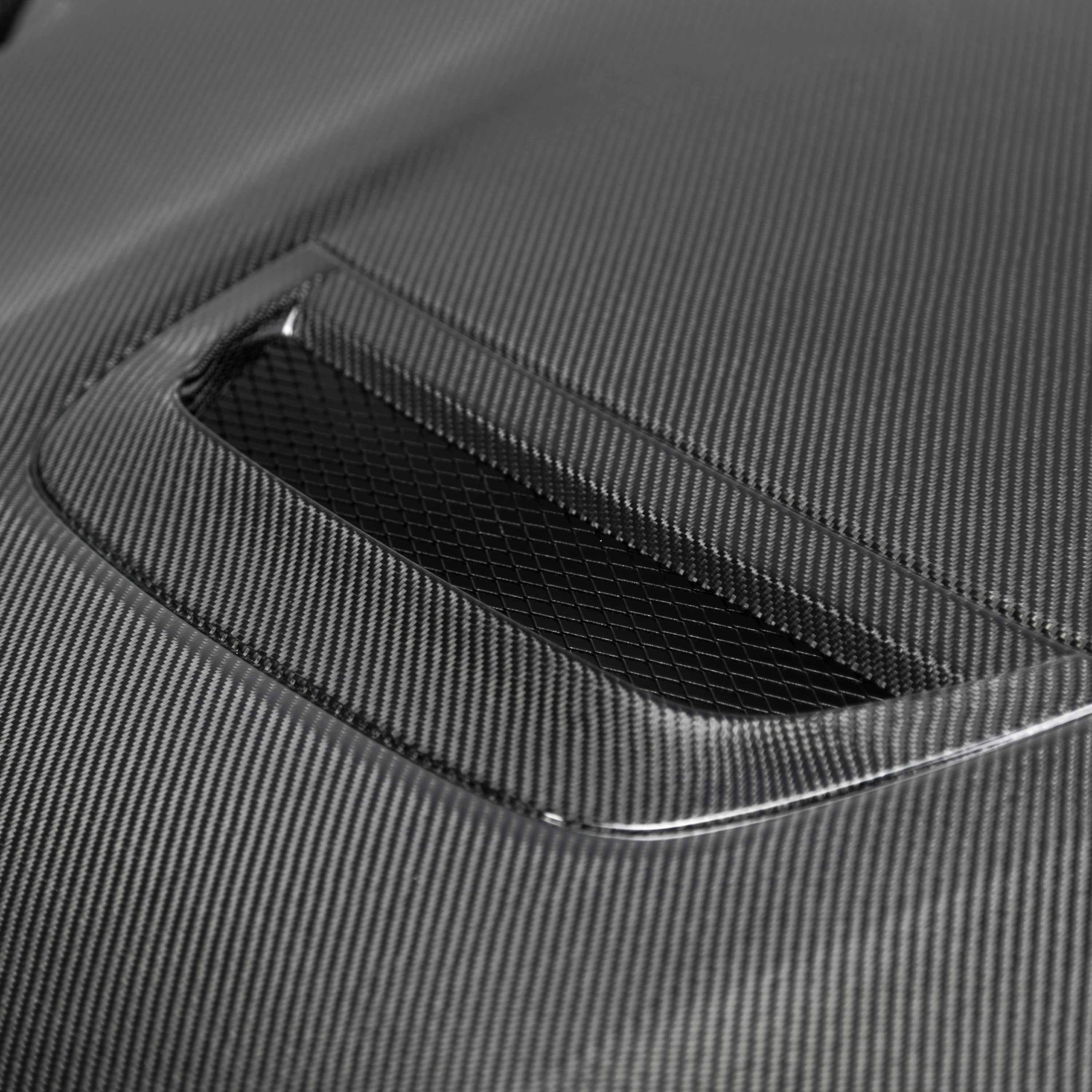
What a carbon fiber hood changes
- Looks. The big one. Exposed weave or painted, it changes the front of the car.
- Weight. Carbon is lighter than a steel or aluminum hood, and it's weight high up and at the front.
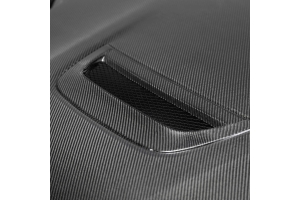
- Heat. Vented designs can help move hot air out of the engine bay.
The biggest takeaway: fitment and latching matter more than weave
My concern with carbon hoods in general is how they mount and latch. A hood is a big panel at highway speed. Check how it attaches, whether it uses the factory latch, and whether hood pins are recommended. Your installer should test fit and adjust panel gaps before anything is painted or clear coated.
The hoods we carry
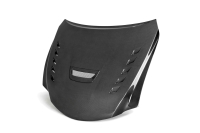
Lexus RC F: Seibon BT style
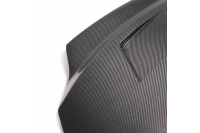
The Seibon BT Style Carbon Fiber Hood is listed for the 2015-2017 RC F. Note that year range.
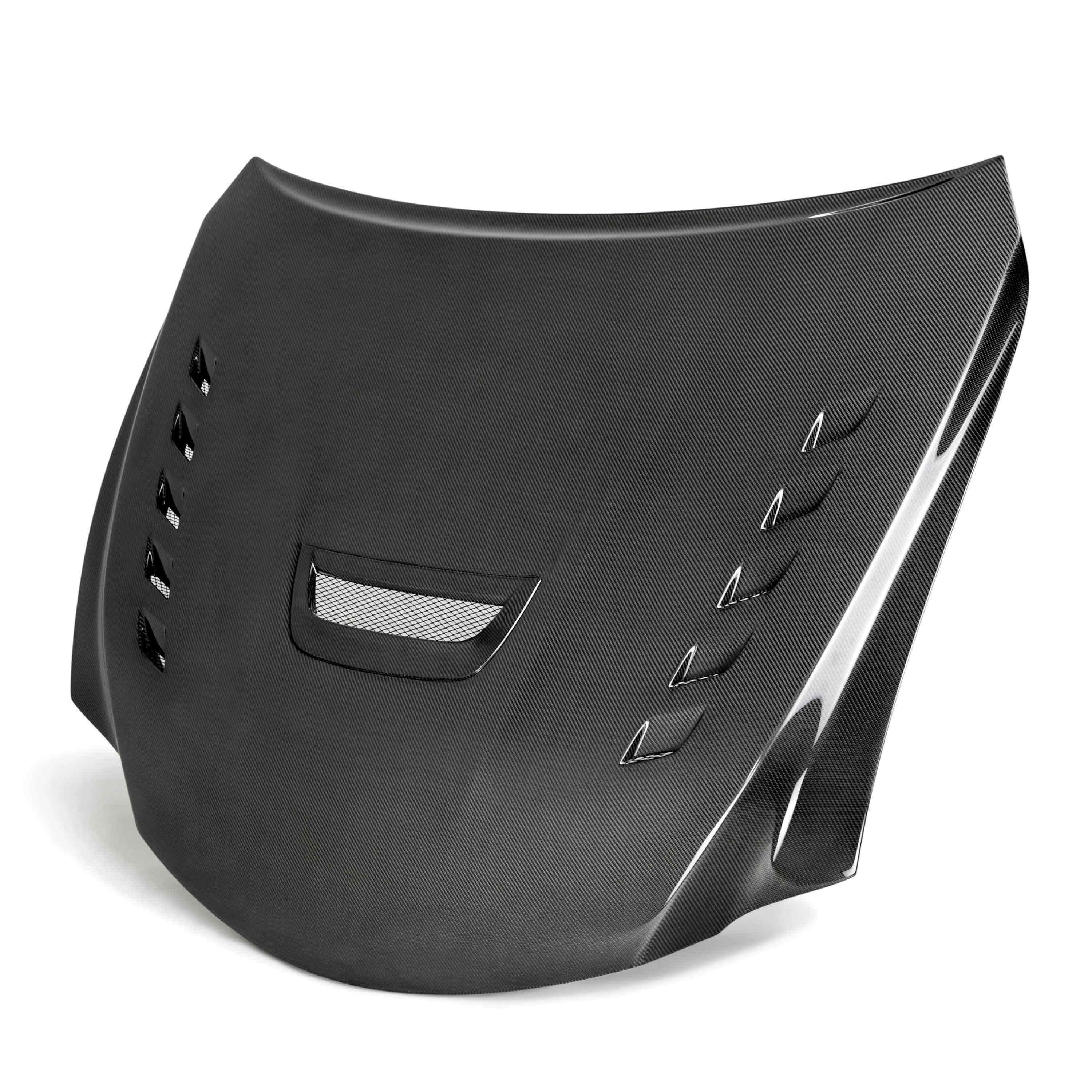
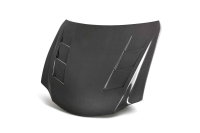
Lexus RC (not RC F): Seibon TS style
The Seibon TS Style Carbon Fiber Hood is for the regular RC, not the RC F. Easy mistake to make.
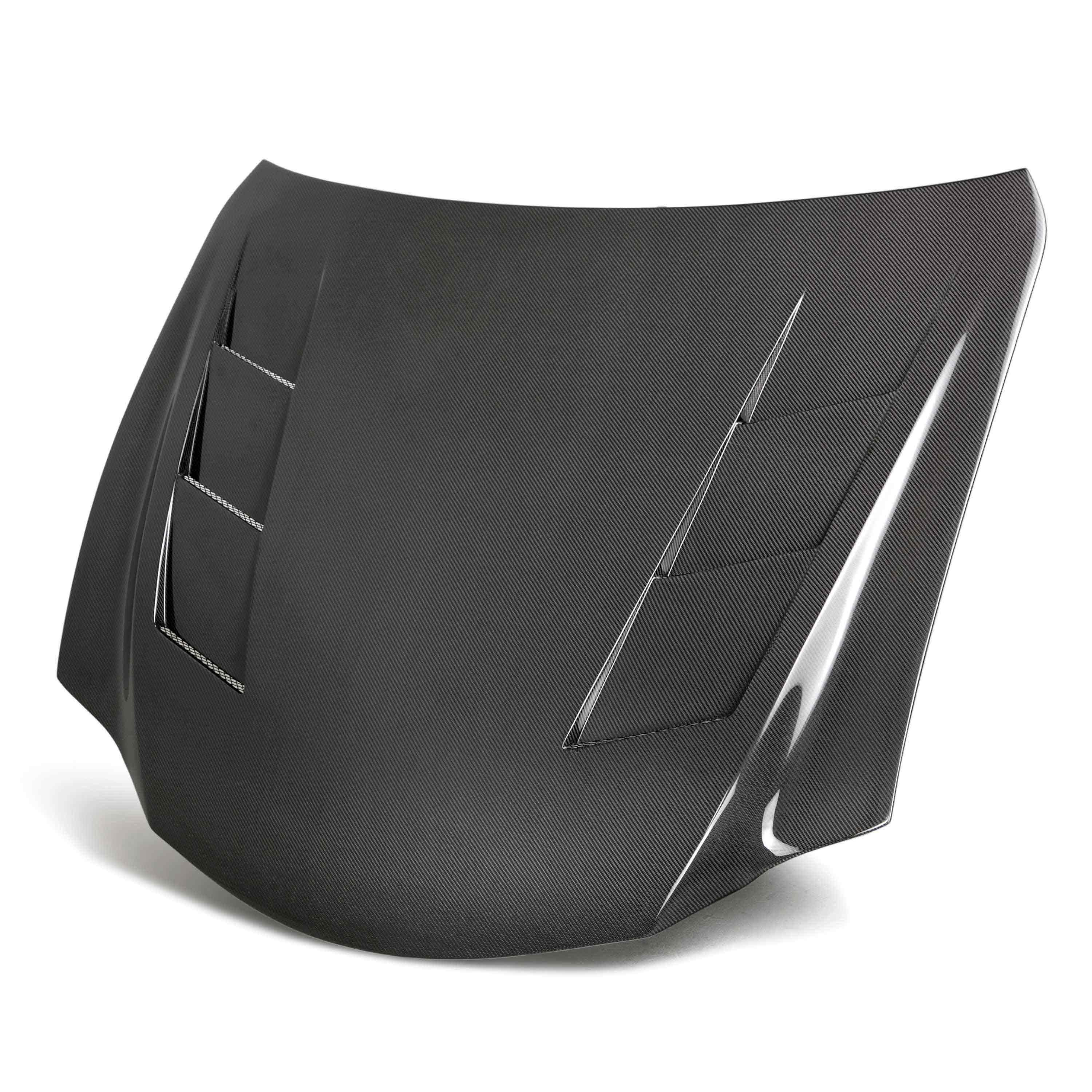
Lexus IS F: NOVEL cooling bonnet
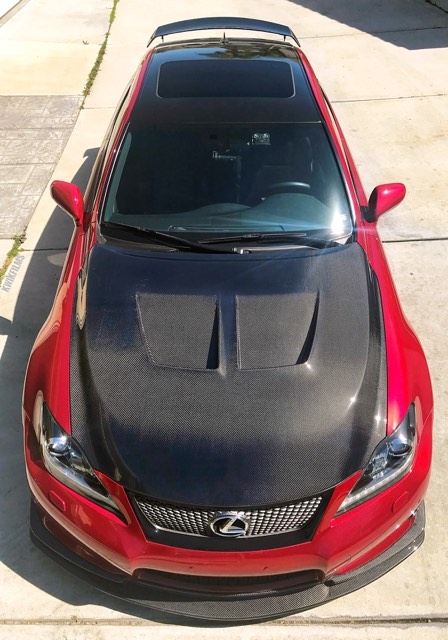
The NOVEL carbon cooling bonnet for the IS F is handmade in Japan and vented to move air through the engine bay.
Exposed carbon vs painted
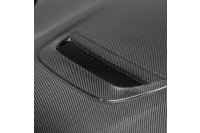
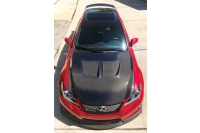
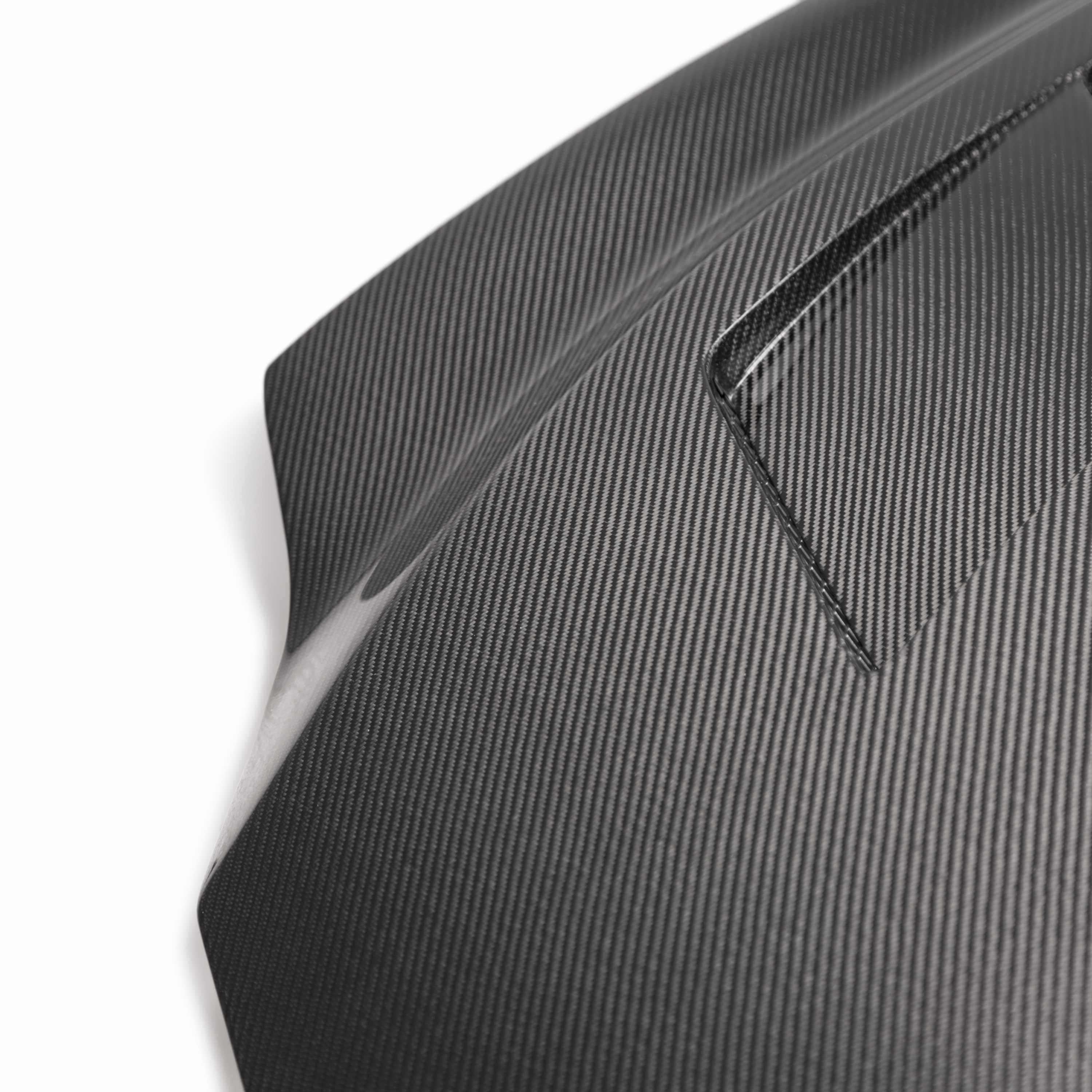
Exposed carbon looks amazing, but it needs care. UV exposure can fade or yellow clear coat over time. Park in the shade or use a cover if you can, and use a good sealant. Painting it gives you the weight savings with a factory look.
Tradeoffs
- Cost vs a part you see every day. Worth it for many owners.
- Care. Exposed carbon needs UV protection.
- Rain. Vented hoods can let water into the engine bay. Ask your installer about it.
Carbon fiber hood install: what a good shop does
A hood looks like a simple bolt-on. Four bolts at the hinges, done. In practice, the difference between a hood that looks right and one that looks aftermarket is all in the fitting. Here's what we'd expect a good shop to do:
- Inspect the hood out of the box. Check the weave, the clear coat and the underside before anything else. Shipping damage is easier to deal with before install.
- Transfer hardware. Latch striker, bumpers, washer nozzles if applicable, and any insulation or brackets from the factory hood. Check the product page for what's included and what you need to move over.
- Hang it loosely and close it gently. Never slam a new hood the first time. Check that the latch lines up first.
- Adjust panel gaps. Hinges and stops get adjusted until the gaps to the fenders and bumper look even.
- Confirm the latch engages fully. Then decide on hood pins based on the manufacturer's instructions and how you use the car.
- Paint or clear only after fitting, if you're painting.
Difficulty: medium. It's two person work at minimum, because a hood is awkward even when it's light, and you don't want it swinging into a fender.
Year and model gotchas
We see the same mistakes again and again, so here they are in one place:
- RC vs RC F. The regular RC and the RC F have different hoods. The Seibon TS style is for the RC 2015-2020. The Seibon BT style is for the RC F.
- RC F years. The BT style lists 2015-2017. If your RC F is a later car, ask us before ordering.
- IS F vs IS 250/350. The NOVEL cooling bonnet is an IS F part. The 2IS IS 250 and IS 350 use a different hood.
When in doubt, send us your VIN. A hood is a big, expensive panel to return.
Rain, heat and vented hoods
Vented hoods are designed to let hot air out of the engine bay. The flip side is that water can get in when it rains or when you wash the car. That's usually fine on a car designed for it, but it's worth thinking about. Ask your installer whether anything sensitive sits under the vents. Some owners add simple rain trays or shields where it makes sense. And if you live somewhere with a lot of rain, factor that into the decision.
Exposed carbon care, in more detail
The clear coat on carbon is what protects the weave. Take care of it like you would good paint:
- Wash with a pH neutral soap, not harsh degreasers.
- Use a sealant or ceramic coating with UV protection.
- Park in the shade or garage when you can.
- Paint protection film on the leading edge helps with rock chips.
- If the clear starts to look hazy over the years, a detailer or body shop can often refresh it before it gets worse.
Does a carbon fiber hood make the car faster?
Honestly, on a street car, not in a way you'll feel. It does remove weight from the front and from high up on the car, which is the right place to save weight. Vents can help heat leave the engine bay, which is nice at the track. But most owners buy a carbon hood because of the look, and that's a perfectly good reason. We'd just rather be honest about it.
Seibon or NOVEL: how they differ
Seibon is a carbon brand that makes hoods and trim for a lot of cars, and their style names, like BT and TS, describe the shape and venting. That makes them a practical choice if you like a particular look and want a straightforward carbon hood for your RC F or RC.
The NOVEL cooling bonnet is a different kind of part. It's made in Japan by a shop that builds and races Lexus V8 cars, and it's designed specifically for the IS F, with venting meant to move air through the engine bay. It's also handmade, which is part of why it costs what it does.
So the choice usually isn't Seibon versus NOVEL head to head. It's about which car you have and what you want the hood to do. RC and RC F owners have the Seibon options. IS F owners who want the Japanese tuner piece have the NOVEL bonnet.
What to pair with a carbon hood
A carbon hood looks best when the rest of the car agrees with it. On the RC F, carbon aero like a NOVEL front lip ties it together. Our RC F build guide covers how we'd sequence that. On the IS F, the NOVEL cooling bonnet pairs with NOVEL fender ducts and a front lip, and our IS F at 18 post talks about building that car today.
What we hear from customers
The happiest hood customers are the ones who planned the install. They found a shop that had done carbon hoods before, they test fit before paint, and they knew upfront whether they wanted exposed weave or color match. The unhappy stories almost always come from rushing: a hood slammed shut before checking the latch, or painted before fitting. Take your time and this is one of the most satisfying parts you can put on a car.
FAQ
Does the Seibon TS hood fit the RC F?
No. It's listed for the RC, not the RC F.
Which RC F years does the BT hood fit?
The listing names 2015-2017. Confirm with us for other years.
Should I use hood pins?
Ask your installer and check the product instructions.
Can I paint a carbon hood?
Yes. Many owners paint to match.
Do carbon hoods fade?
Clear coat can fade with UV over time. Protect it.
Is a carbon fiber hood safe at highway speeds?
A properly fitted hood that latches fully is designed for the road. Follow the manufacturer's instructions, and use hood pins if they're recommended.
Will a carbon fiber hood fit with my factory hood insulation?
It depends on the hood. Check the product page and ask your installer.
Does the NOVEL cooling bonnet fit the IS 350?
No. It's an IS F part.
How much lighter is a carbon fiber hood?
It depends on the hood and the car. Check the product page for any weight the manufacturer lists. We won't guess a number.
Can I install a carbon fiber hood myself?
With a helper and patience, some owners do. Getting gaps and the latch right is the hard part, so many people use a body shop.
Do I need to transfer parts from my factory hood?
Usually some hardware moves over, like the latch striker and rubber stops. Check the product page for what's included.
Next step
If you're putting a plan together, the easiest thing is to add the parts you're looking at to your cart and hit Add to Quote. We'll look it over, confirm fitment and availability, and get back to you. If you'd rather talk it through first, reach out and Tania or Kenia can help with fitment and stock questions. No pressure at all. We'd rather you buy the right part once than the wrong part twice.